The Vault Gazette
How to Document a Comic Collection for Insurance
A practical guide to creating the kind of organized comic collection record that can help when it is time to talk to an insurer.
A comic collection can grow slowly over years. A few books become a short box. A short box becomes several long boxes. Then one day, what started as a hobby becomes something that may need to be documented, protected, and explained.
That is where insurance documentation matters. If you own valuable comics, graded books, key issues, or a large collection, you should have a clear record of what is in your collection and why those books may matter.
The goal is simple: make your collection easier to understand before you ever need the documentation.
Start with a complete inventory
The first step is knowing what you own. A useful comic collection inventory should include enough information to identify each book clearly.
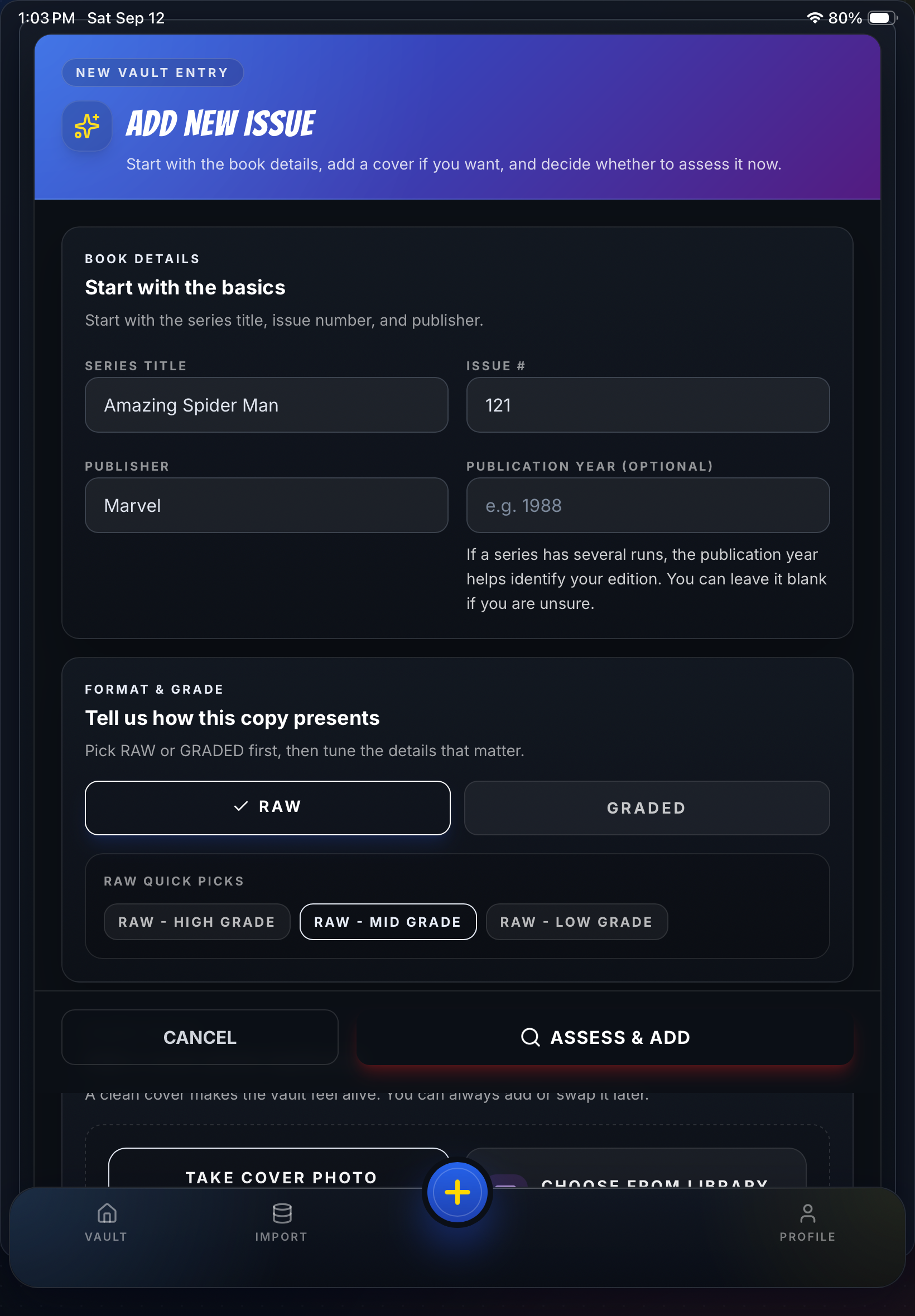
- Title
- Issue number
- Publisher
- Publication year
- Condition or grade
- Whether the book is raw or professionally graded
- Variant, edition, or special printing information
- Certification number for graded books, where applicable
These details help distinguish one comic from another. That matters because similar-looking books can have very different values depending on edition, condition, grade, scarcity, and market demand.
Photos are useful because they connect the written record to the actual copy in your collection. This is especially important for graded slabs, high-value raw books, variants, signed copies, and books with distinctive defects or presentation details.
In ComiCollector, collectors can add a cover photo when cataloguing a book. That image becomes part of the ComicCard and helps make the digital record easier to recognize later.
Record condition and grading details
Condition can dramatically affect comic book value. For insurance documentation, it is not enough to know that you own a particular issue. The condition or professional grade may be one of the most important parts of the record.
For raw books, ComiCollector lets collectors record condition categories such as RAW High, RAW Mid, and RAW Low. For professionally graded books, collectors can record the exact slab grade and certification number.
Keep assessed values organized
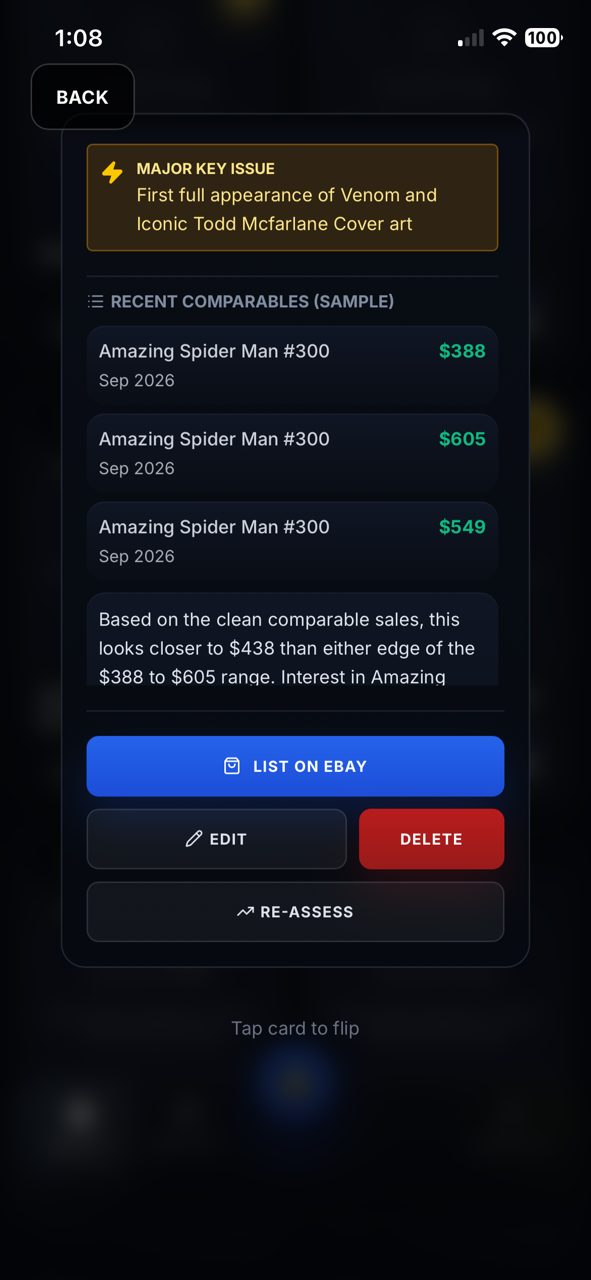
A collection record becomes more useful when it includes current assessed values. Those values can help collectors understand the scale of their collection and support better conversations about insurance coverage.
ComiCollector assessments use available market evidence, comparable data, condition, edition, grade, and other relevant details to help collectors understand what a book may be worth in the current market.
Understand that values can change
Comic markets move. A character appearance, film announcement, creator news, scarcity discovery, or collector trend can affect demand. A book that seemed ordinary years ago may become important later.
That is why collection documentation should not be treated as a one-time job. If your collection changes, or if the market around key books changes, it may be worth updating your records and reassessing important items.
Create insurance-ready documentation
For collectors concerned about protecting what they own, ComiCollector can generate Insurance Ready documentation. These reports organize collection details and assessed values into a format that can support meaningful conversations with an insurer about coverage and collection value.
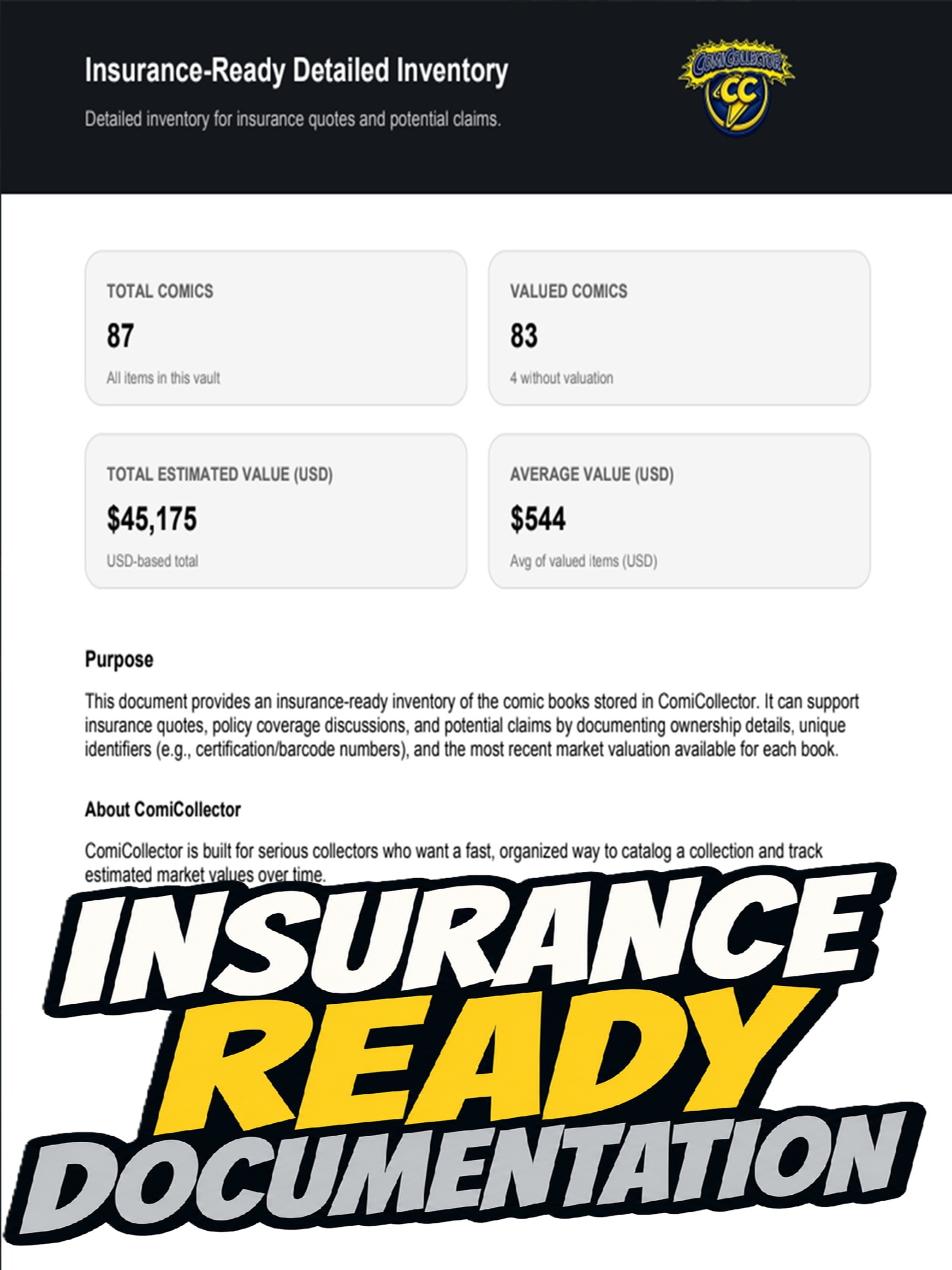
This does not replace professional insurance advice, an appraisal, or the specific requirements of your insurance provider. But it can give you a stronger starting point than a pile of boxes, scattered photos, or an outdated spreadsheet.
What collectors should keep outside the app
A good digital inventory is important, but collectors may also want to keep supporting records outside the app, especially for high-value books.
- Purchase receipts
- Grading certificates or certification references
- Additional photos of front cover, back cover, and notable defects
- Storage location notes
- Insurance policy correspondence
- Appraisal documents, where applicable
The more valuable the collection, the more important it becomes to keep clear supporting documentation.
Document before you need it
The worst time to start building an inventory is after something has gone wrong.
Cataloguing and documenting a collection in advance helps collectors stay organized and prepared. It also makes it easier to explain the collection to family members, insurers, buyers, or anyone else who may need to understand what is there.
One vault for the collection
ComiCollector was built to make collection documentation feel like part of collecting, not a separate chore.
You can catalogue books, add cover photos, record raw or graded condition, track important issues, assess values, and create organized documentation from the same collection record.
The result is a digital vault that helps collectors understand, protect, and enjoy what they own.