The Vault Gazette
Raw vs Graded Comics: A Beginner's Guide to Comic Book Condition and Value
What is a raw comic? What makes a comic “graded”? What does a 9.8 mean? If you are new to comic collecting, start here.
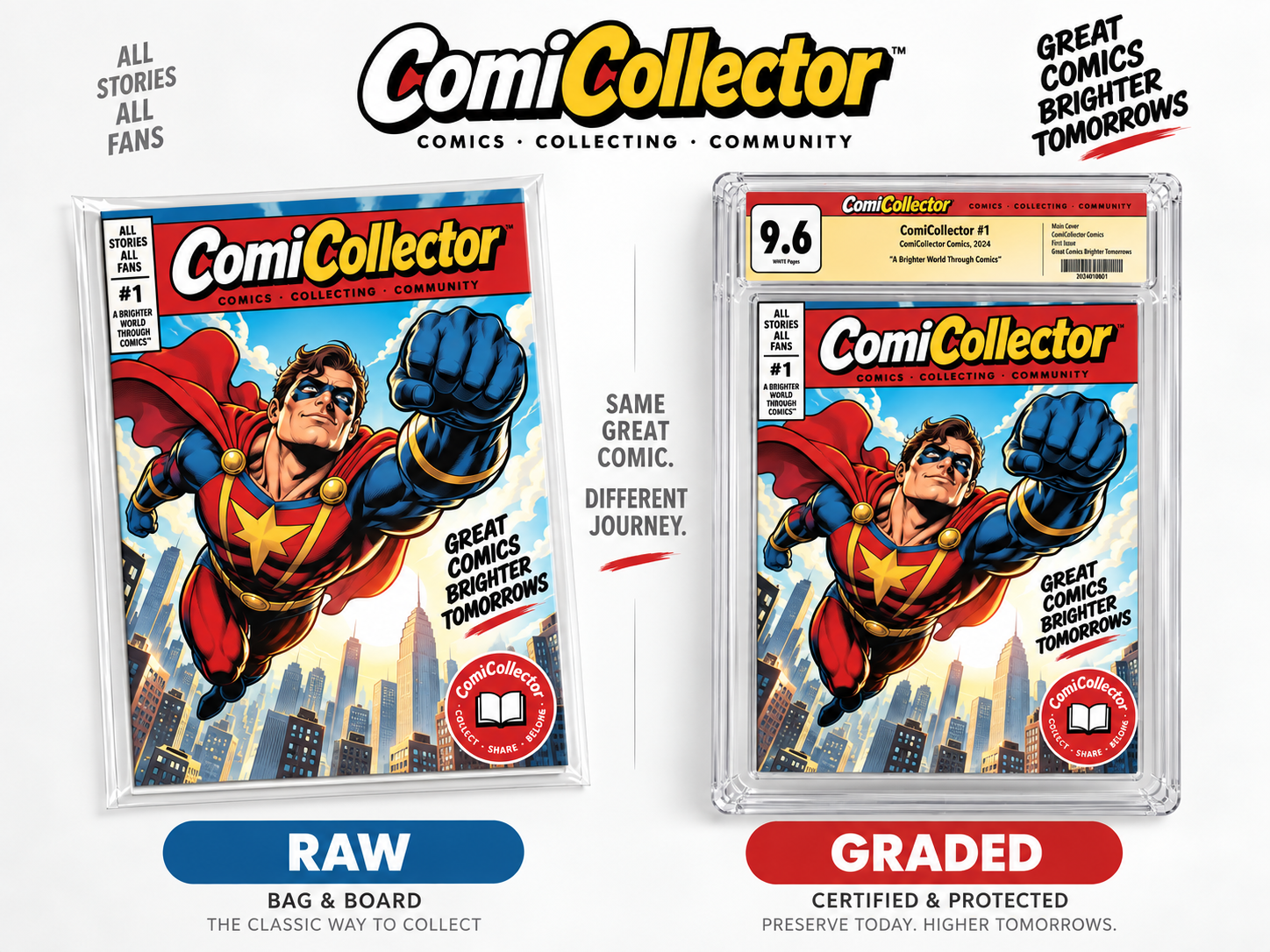
You find two copies of the exact same comic.
One costs $40.
The other costs $400.
Same title. Same issue number. Maybe even the same cover.
So why can two copies of the same comic have completely different values?
One of the biggest reasons is comic book condition.
Condition describes the physical state of a comic. A clean copy with sharp corners and very little wear can occupy a very different part of the market from a copy with creases, spine ticks, stains, tears, fading, or missing pieces.
Before getting into comic book grades and values, there are two terms every new collector should understand: raw comics and graded comics.
What is a raw comic?
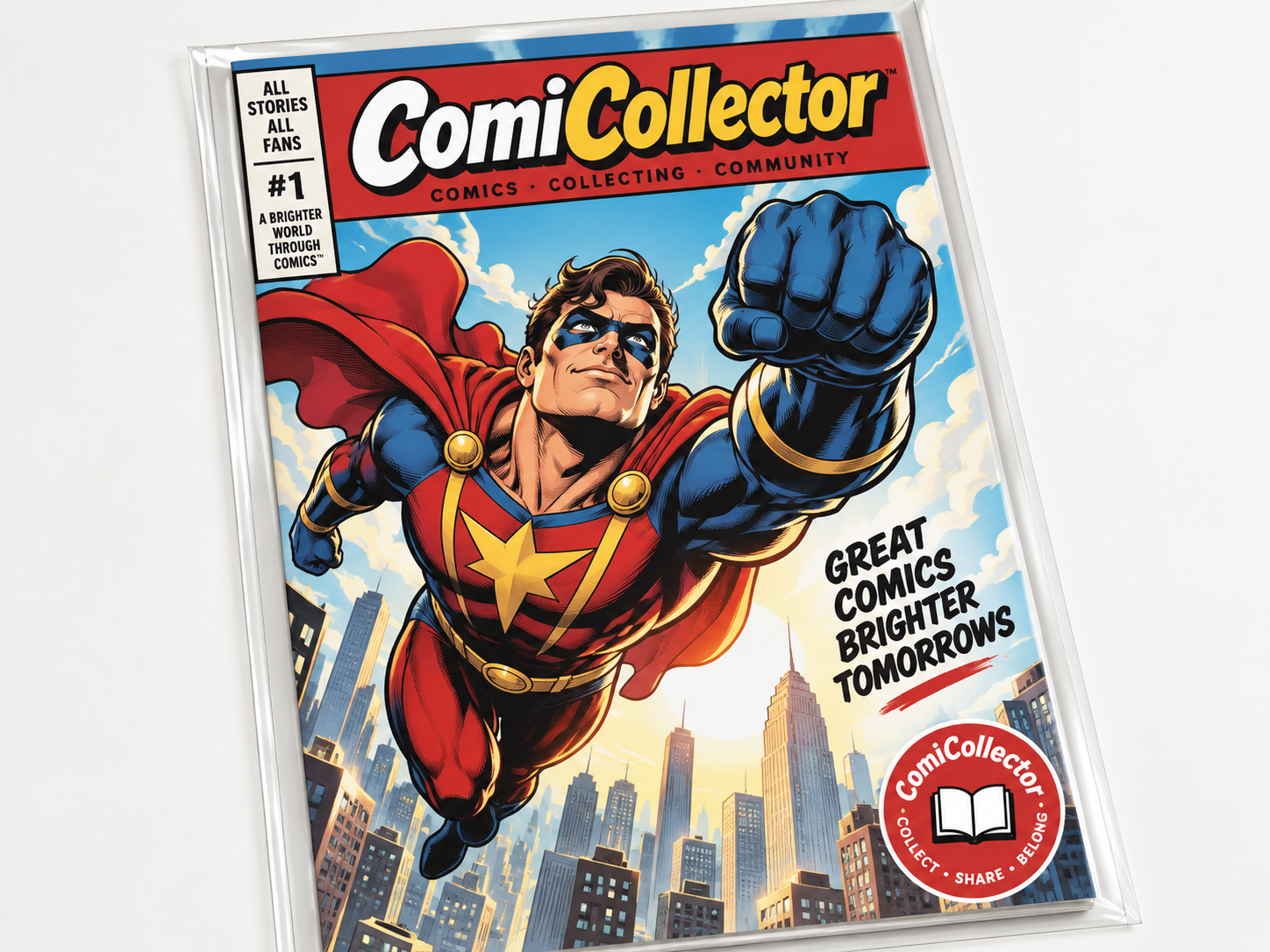
A raw comic is a comic book that has not been professionally graded and sealed inside a certified holder.
Most comics collectors encounter are raw.
They may be stored in a bag and board, sitting in a long box, displayed on a comic shop wall, or handed to you at a convention.
Being raw does not mean a comic is cheap, common, or in poor condition. A raw comic can be rare, valuable, historically important, or exceptionally well preserved.
It simply means a professional grading company has not assigned an official numerical grade to that particular copy.
How do you judge the condition of a raw comic?
Raw comic grading requires some judgment.
Collectors commonly examine:
- The front and back covers
- The spine
- Corners and edges
- Spine ticks and colour-breaking creases
- Staples
- Page condition
- Tears, stains, writing, or missing pieces
- Gloss, colour, and overall eye appeal
Two collectors may look at the same raw comic and disagree slightly about its exact condition. That is normal.
It is also why a seller describing a comic as “high grade” does not automatically make that description correct.
Look at the actual comic whenever possible.
What do RAW High, RAW Mid and RAW Low mean in ComiCollector?
ComiCollector keeps raw comic condition deliberately simple.
When adding an ungraded comic, collectors can select one of three broad condition bands:
- RAW High — a cleaner, higher-condition copy with relatively limited wear
- RAW Mid — a copy showing a moderate amount of wear
- RAW Low — a more heavily worn or lower-condition copy
These are broad assessment categories rather than attempts to assign an exact professional numerical grade to an ungraded comic.
For a new collector, the important thing is to choose the condition range that most closely represents the copy you actually own.
What is a graded comic?
A graded comic is a comic that has been submitted to a professional comic book grading company for evaluation.
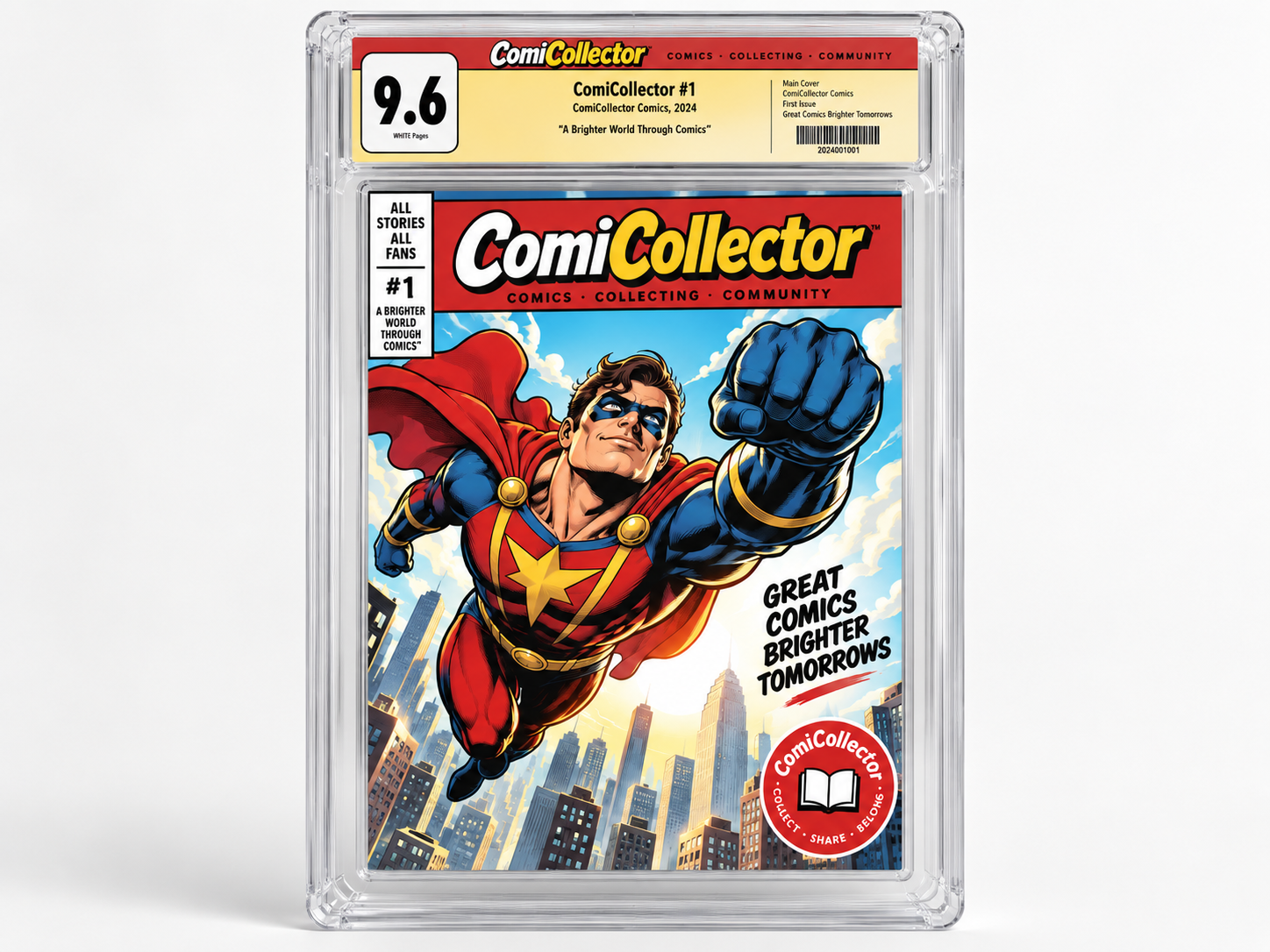
The grading company examines the comic, assigns it a numerical condition grade, and normally seals it inside a tamper-resistant protective holder.
Comic collectors usually call that holder a slab.
So if another collector says, “I have that book in a 9.8 slab,” they mean they own a professionally graded copy that received a 9.8 grade.
The grading label typically identifies the comic and its grade and includes a unique certification number, along with other information supplied by the grading company.
What do comic book grades mean?
Professional comic book grading uses a numerical scale that runs as high as 10.0.
In simple terms, a higher numerical grade generally represents a comic in better physical condition.
Collectors commonly discuss grades such as 9.8, 9.6, 9.4, 8.0, 6.0, 4.0 and lower.
One of the first surprises for new collectors is how much a seemingly small difference in grade can sometimes affect value.
A 9.8 and a 9.6 may sound almost identical. Depending on the comic, however, the market difference can be significant.
On another issue, buyers may place very little premium on that same grade difference.
There is no universal dollar amount attached to a comic grade. The grade only makes sense when considered alongside the particular issue and its market.
How does ComiCollector catalogue graded comics?
When adding a professionally graded comic to ComiCollector, collectors can use the app's scroll-wheel selector to record the exact numerical grade of the slab.
The certification number can also be stored with the comic's record.
This helps ComiCollector distinguish between different graded copies of the same issue.
A 9.8, a 9.6, and a 9.2 may all contain exactly the same comic story, but from a market perspective they should not automatically be treated as equivalent.
Why does comic book condition affect value?
Comic book values are influenced by supply and demand, but that does not mean simply counting how many copies of an issue exist.
Collectors may also care about how many desirable copies exist in a particular condition.
Imagine that thousands of copies of a comic survived, but very few remain in exceptionally high grade. Collectors chasing the best available copies may be willing to pay a substantial premium.
This effect can be especially noticeable with older comics, major key issues, scarce variants, and books that are difficult to find in high grade.
Lower-grade copies can still be very collectible.
A worn copy of an important comic may still have substantial demand because collectors care about the issue itself, not only its grade.
A low-grade copy of a major key is still a major key.
Raw comic vs graded comic: which is better?
Neither is automatically better.
Some collectors prefer raw comics because they can handle and read the actual book. Others prefer graded comics because the stated grade makes condition easier to identify and the slab provides additional protection.
Some collectors own both.
The better choice depends on why you collect, the comic involved, its value, whether you intend to read it, and your own preferences.
What matters most is understanding what you are buying.
Are graded comics easier to value?
Often, yes — but that does not mean every slab with the same grade is identical.
If you own a CGC 9.8, for example, other relevant 9.8 copies may provide a clearer comparison than unrelated raw copies.
Even then, collectors may need to consider variants, newsstand editions, signatures, restoration, scarcity, special characteristics, and the timing of the market.
The goal is always to compare the comic with evidence that actually matches the copy as closely as possible.
Is an asking price the same as comic book value?
No.
This is one of the most useful lessons a new comic collector can learn.
Imagine searching online for your comic and finding a copy listed for $500.
That tells you someone is willing to ask $500.
It does not prove another collector is willing to pay $500.
A listing may be optimistic, poorly identified, incorrectly graded, or simply priced above the current market.
Asking prices can still provide useful market evidence. They just need context.
Does one high comic sale determine what every copy is worth?
Not necessarily.
Imagine two determined collectors desperately want the same copy and bid against each other until it sells for far more than similar books normally do.
That transaction is real.
It is a legitimate data point.
But one unusually enthusiastic buyer does not automatically establish the value of every other copy.
Understanding a comic market means looking at the overall pattern rather than simply finding the highest number available.
How does ComiCollector assess a comic's value?
After you enter your comic's identifying information and condition, you can request a ComiCollector assessment.
The ComiCollector Oracle conducts a market scan using the information you entered.
It combines ComiCollector's proprietary valuation database with live market information where available and looks for evidence relevant to the particular issue and condition being assessed.
ComiCollector uses AI to assist with parts of its research and intelligence, but the system itself has been built and curated by a collector for collectors.
The objective is not to find the biggest price attached to the title online.
It is to interpret the available evidence around the actual comic being assessed.
What does a ComiCollector assessment show?
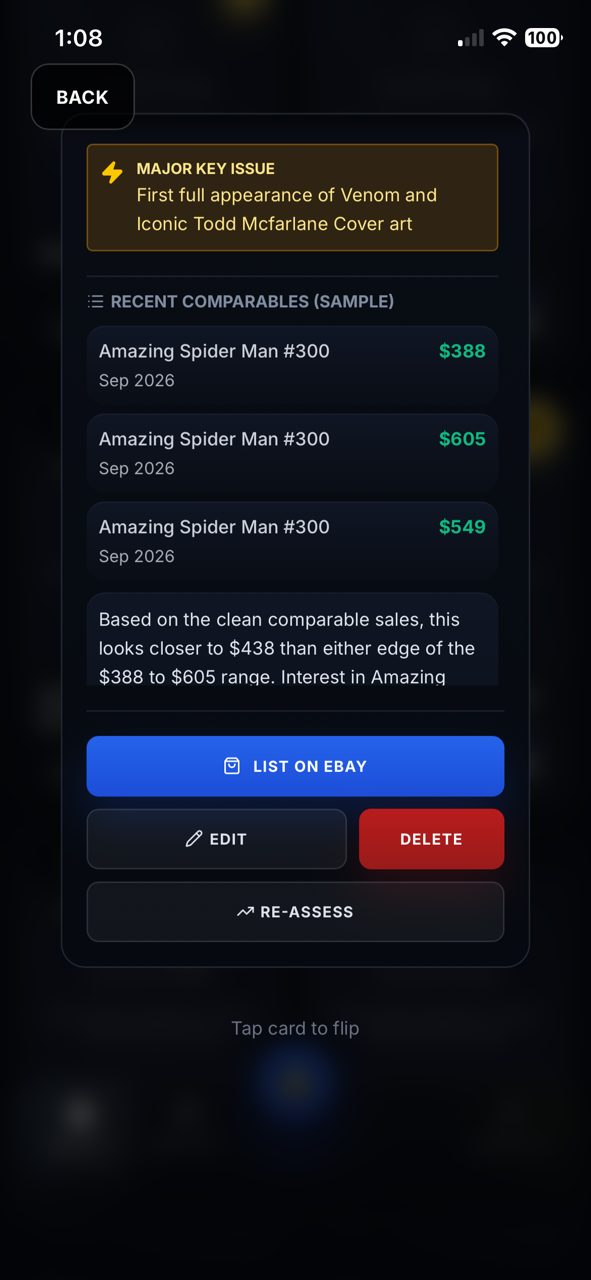
After an assessment, the comic's ComicCard can include an assessed value and recent comparable market information.
This lets collectors see some of the evidence surrounding the assessment instead of receiving an unexplained price.
ComiCollector can also provide a personalized Market Insight note explaining what the available data may be saying about that particular book.
What is a thin comic book market?
Some comics are bought and sold constantly.
Others appear on the market only occasionally.
A market with relatively little relevant evidence is often described as a thin market.
This can happen with Grails, Big Books, unusual variants, very high-grade copies, or comics that simply do not change hands very often.
When only a handful of useful comparisons exist, pretending there is a perfectly precise market price can be misleading.
For those books, ComiCollector can widen the assessment range to reflect the uncertainty in the available market evidence.
A wider range does not necessarily mean something went wrong. Sometimes the market itself simply does not provide enough evidence for a narrower answer.
Comic book grading tips for new collectors
You do not need to become a professional grader before you start collecting comics.
Start by remembering a few basic rules:
- A raw comic has not been professionally graded and slabbed.
- A graded comic has received a professional numerical condition grade.
- Comic book condition can dramatically affect value.
- Two copies of the same issue may be very different collectibles.
- Small differences in professional grade can sometimes produce large price differences.
- An asking price is not automatically the market value of a comic.
- One unusual transaction does not necessarily establish the value of every other copy.
- When comparable market evidence is limited, a wider value range may be more realistic.
Most importantly, do not let grading terminology take the fun out of the hobby.
As you collect, you will learn which defects bother you, which grades matter to you, which creators and characters you keep coming back to, and when paying more for a better copy is actually worth it.
Before long, you may find yourself explaining to another new collector why two copies of the exact same issue can have completely different prices.